Wood, Water
& Waves
A wooden surfboard, grown from an island tree, shaped entirely by hand.
Wood, Water & Waves
A wooden surfboard, grown from an island tree, shaped entirely by hand.
Wood, Water & Waves
A wooden surfboard, grown from an island tree, shaped entirely by hand.
And this our life, exempt from public haunt,
Finds tongues in trees, books in the running brooks,
Sermons in stones, and good in everything.
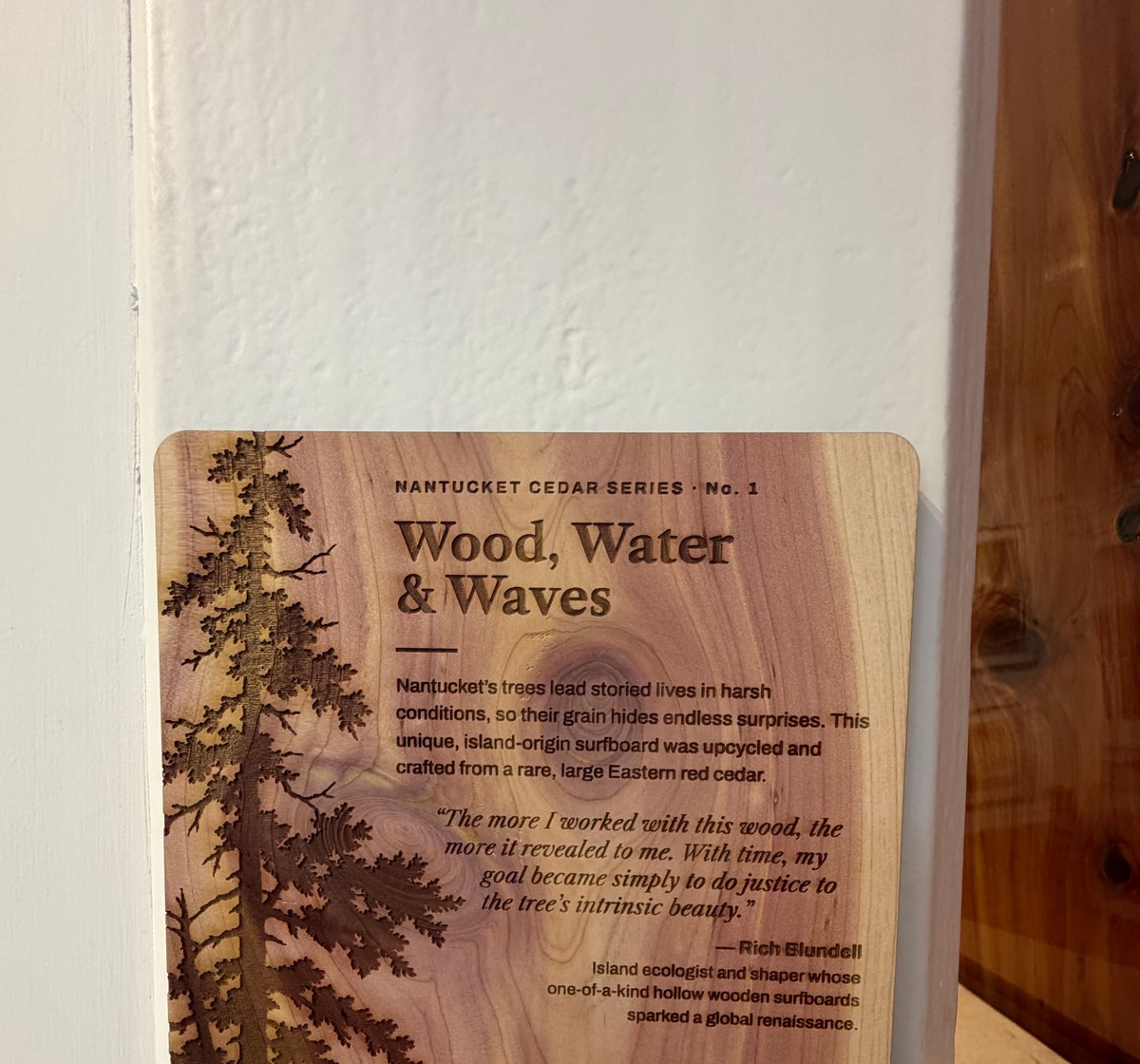
One tree. One board. Grown on Nantucket and shaped by hand, from soil to surf.
The board is shaped by Rich Blundell, whose surfboard designs and build methods are used by hollow wooden surfboard builders around the world. The work happens in a small shack on Nantucket: no factory, no molds, no shortcuts. Just a design, a stack of cedar, and a plane.
The reasoning behind it takes a cue from paleohumans. Rich's work in human evolution argues that when Homo erectus knapped Acheulean handaxes, they were not only making a tool. They were working to a standard of beauty that usefulness alone does not account for — symmetry carried well past the point where it made the edge any sharper. Aesthetic judgment is that old. This board is built on the same logic.
Which meant turning down the faster ways. Rich could have used the cork-in-the-rail method he developed back in 2005, or simply gone with solid cedar rails. He wanted a rail defined as an outline instead, and built the board that would give him one.
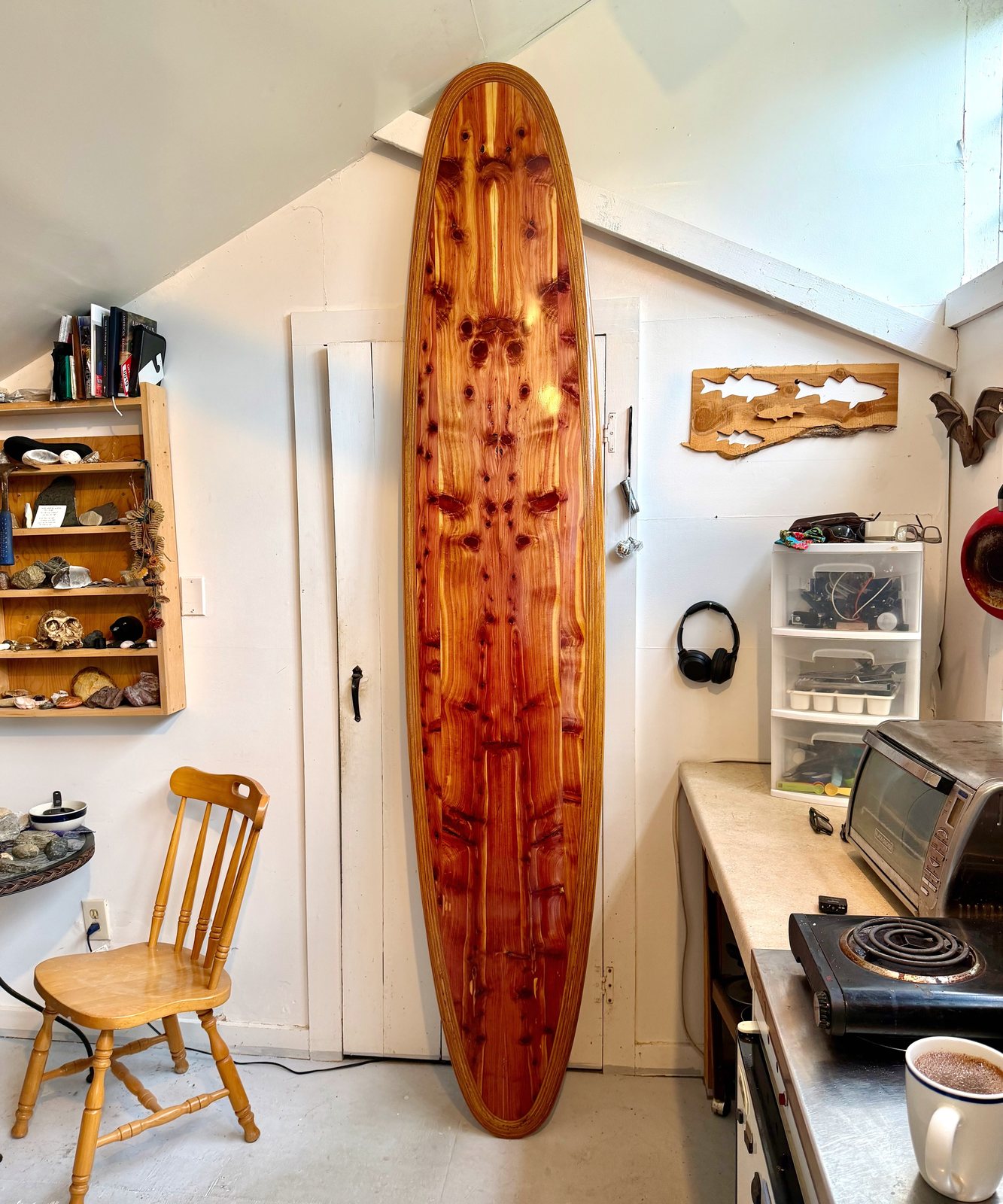
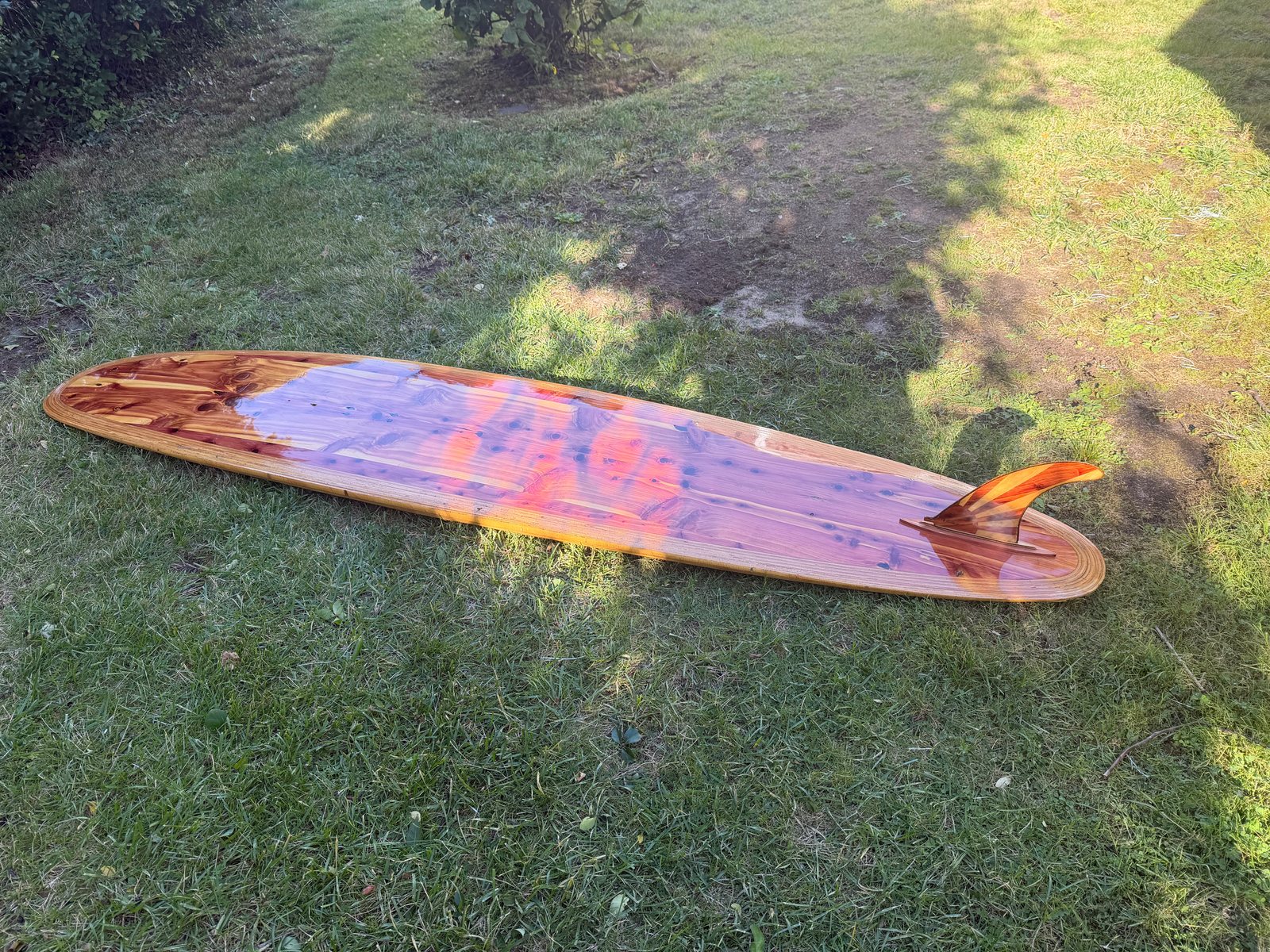
Nine feet of Nantucket cedar, sanded fair and oiled.
The design is finished and every frame is cut — the whole set numbered and laid out in order, bow to tail. Slotted onto the spine, the drawing finally stands up: nine feet of skeleton on the shack floor. The first pieces are glued up in a sunburst of red and white heartwood, and the deck and bottom planks are coming together too — island cedar edge-glued into panels wide enough to take the whole outline, then cut to it. The frame went down on its bottom plank, the box closed over it, and the rails came off the shaping stands with a contrasting rail outline running the whole way round. The fin foils are still in trial — different edges, different halos, one of them eventually wins. Then hours with a straight-edged block to sand it fair, and tung oil to bring the grain up. From here it is fins, and the water.
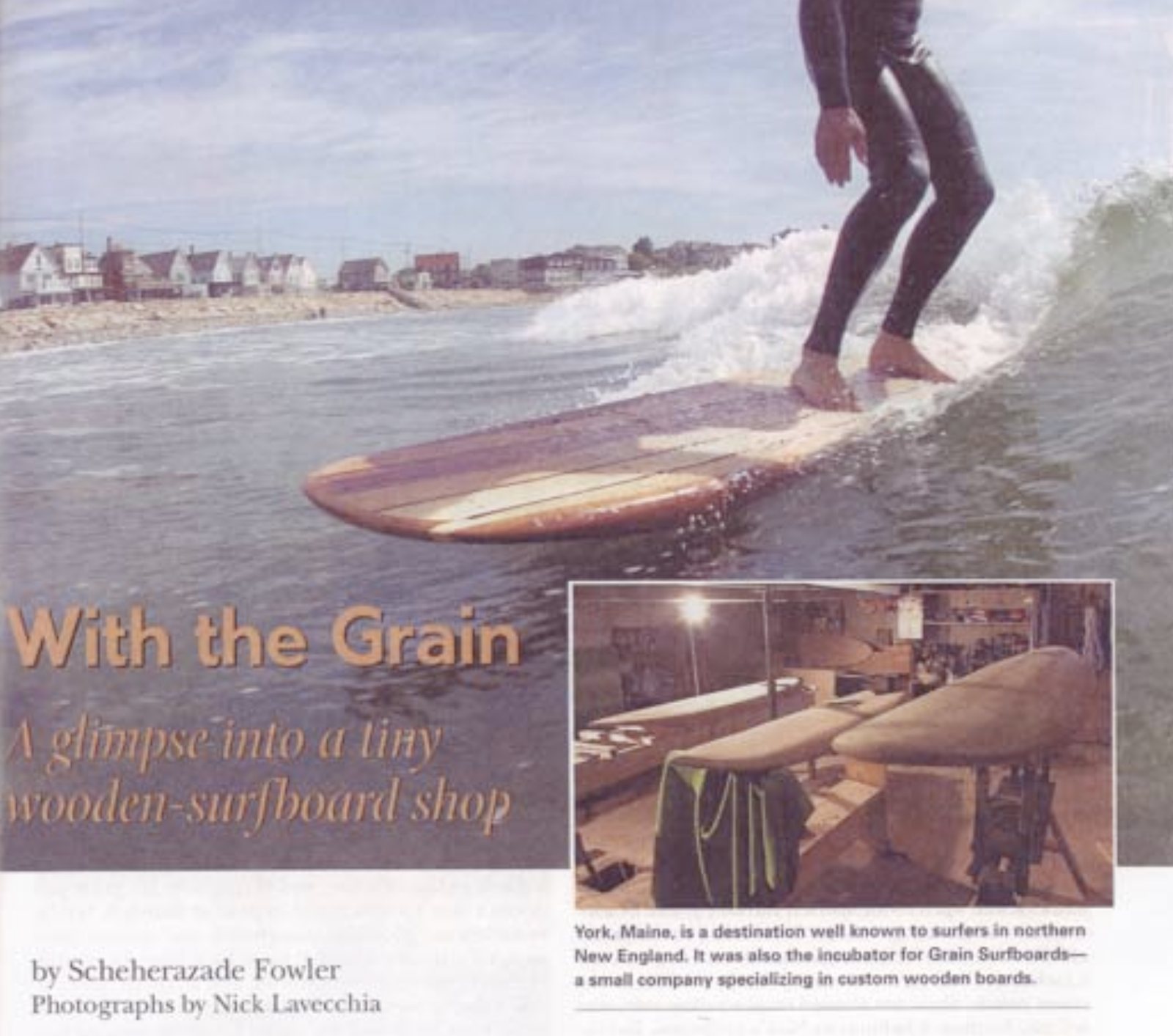
This work has been written about for twenty years.
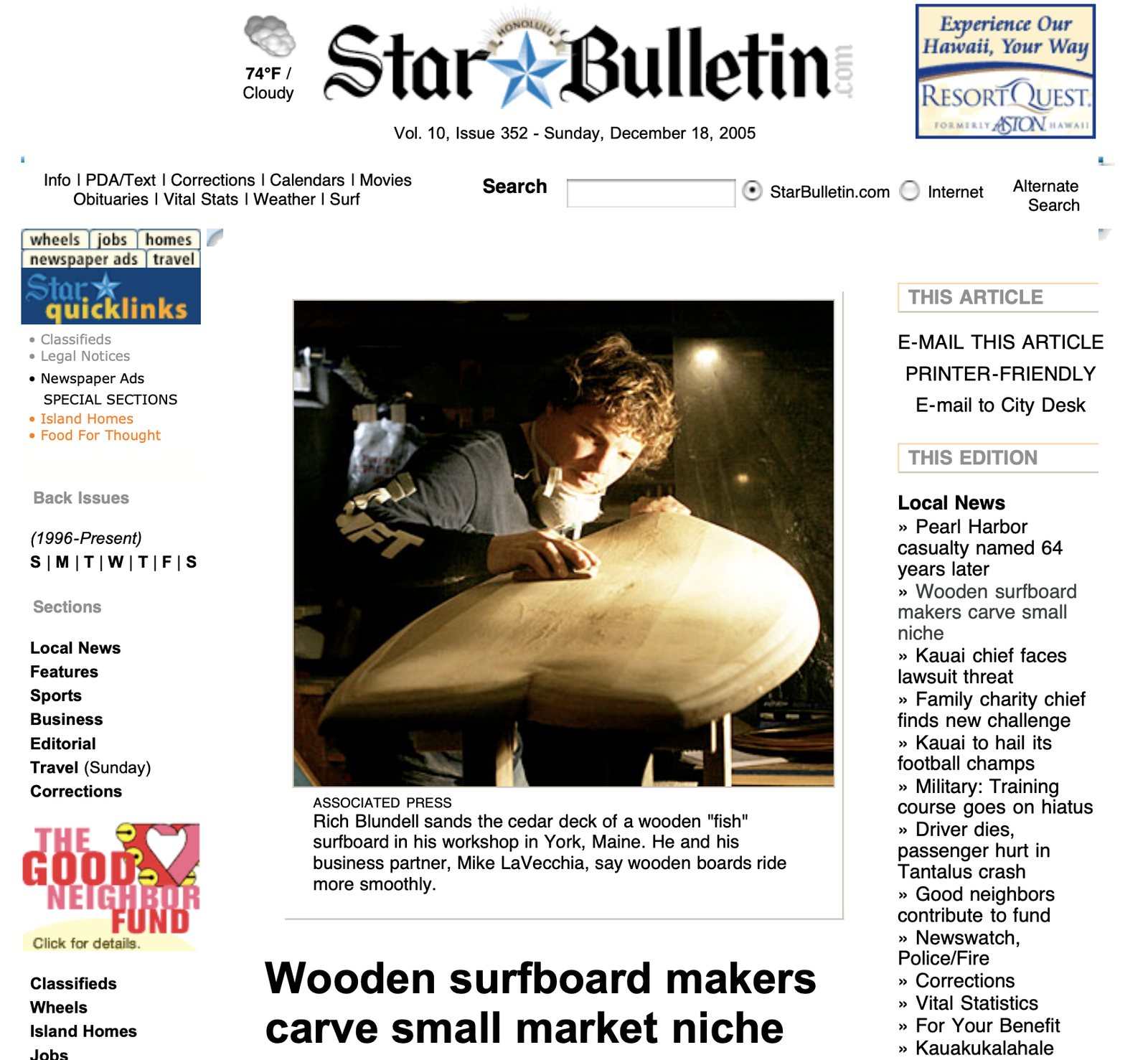
Wooden boards, and the ideas underneath them, have drawn writers since the first hollow cedar boards came out of a small shop in York, Maine. Four of those stories are below, along with a short film — and the next one is already being written.
N Magazine is writing a feature story on Wood, Water & Waves and Rich's philosophy of life. Tentatively titled A Surfer's Guide to the Universe, it is due out in the October or November issue.
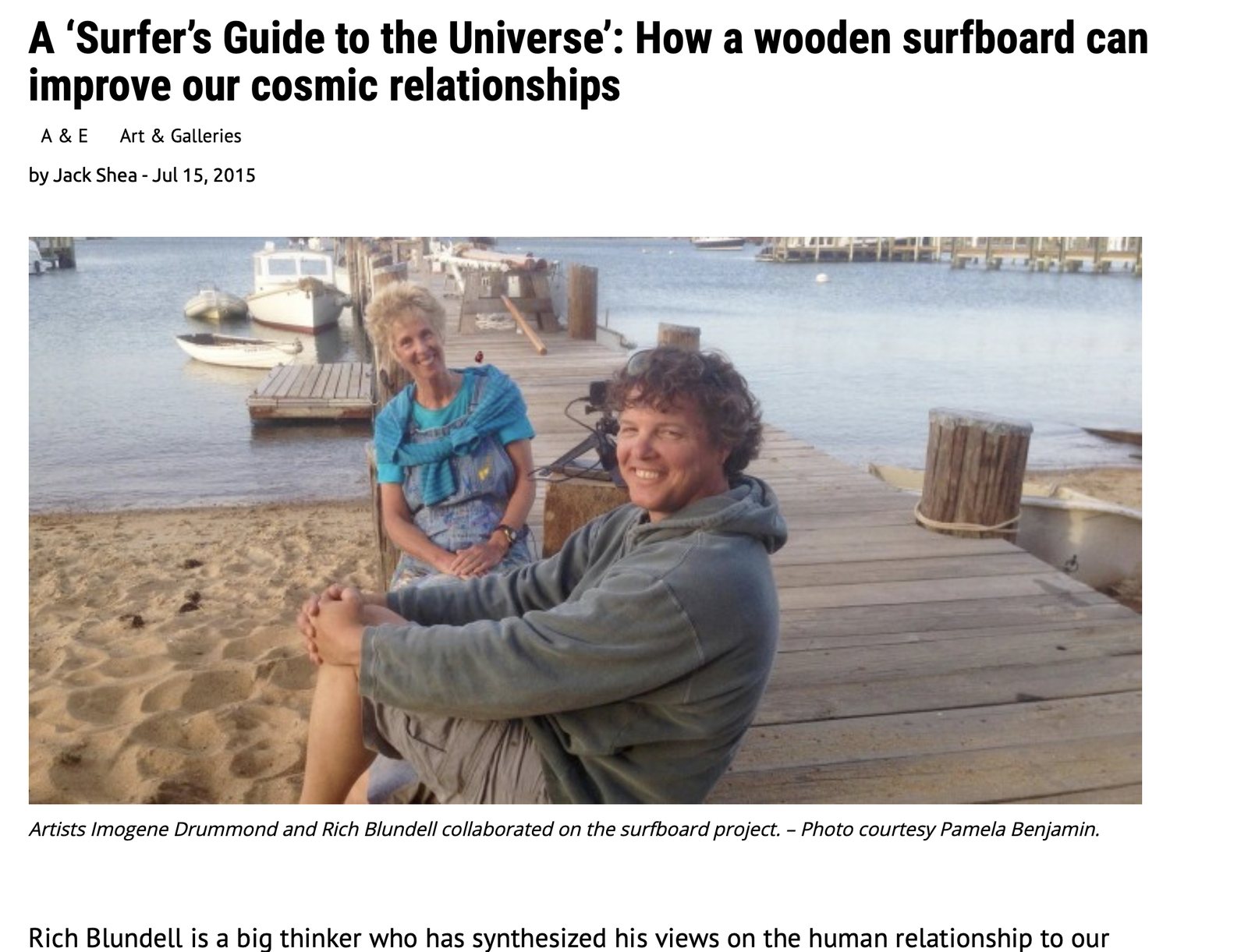
How a wooden surfboard can improve our cosmic relationships.
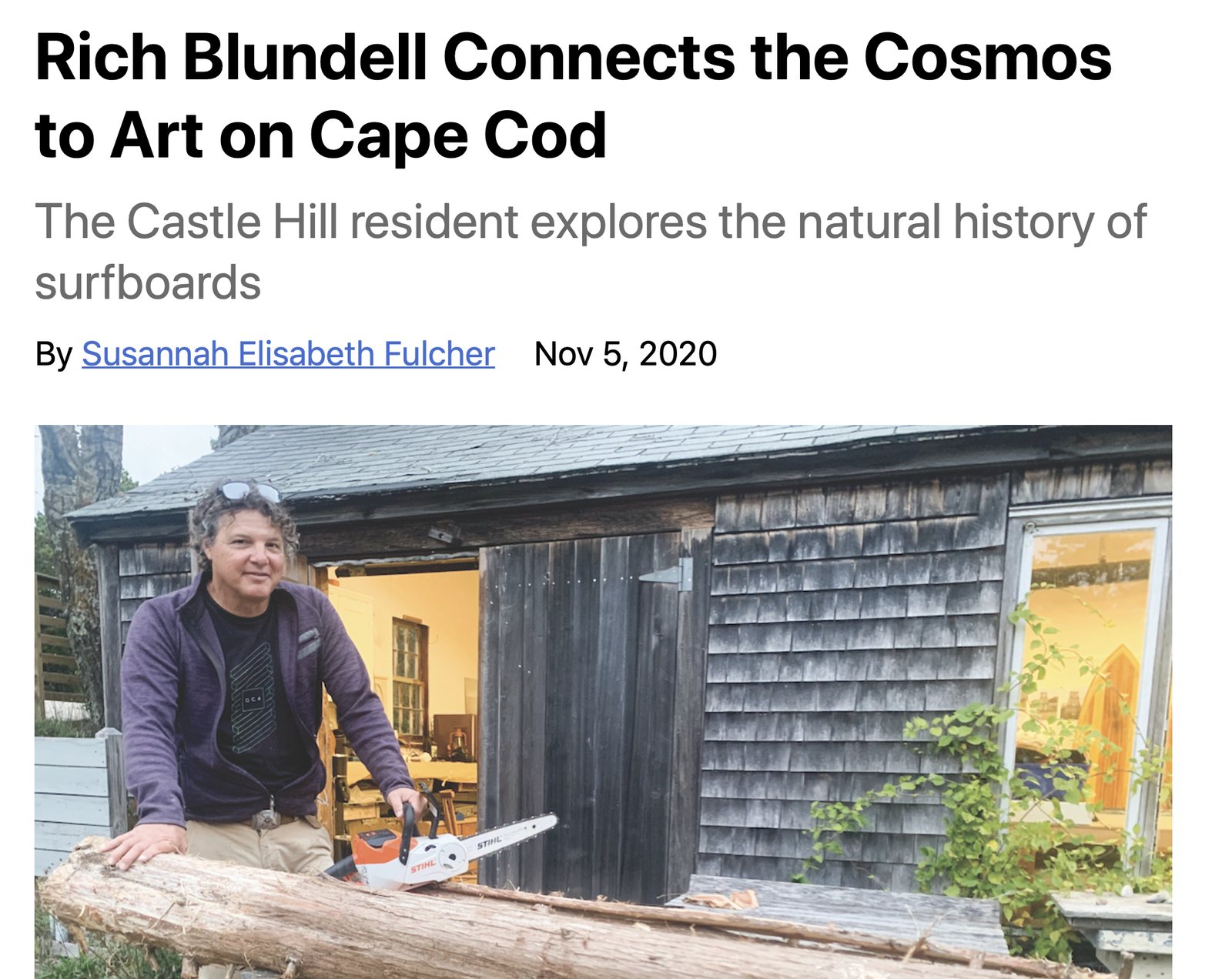
Exploring the natural history of surfboards on Cape Cod.
The soil that fed it. The rain that swelled its grain.
The water it will ride. The wave that is older than memory.
One board, made from all of it.
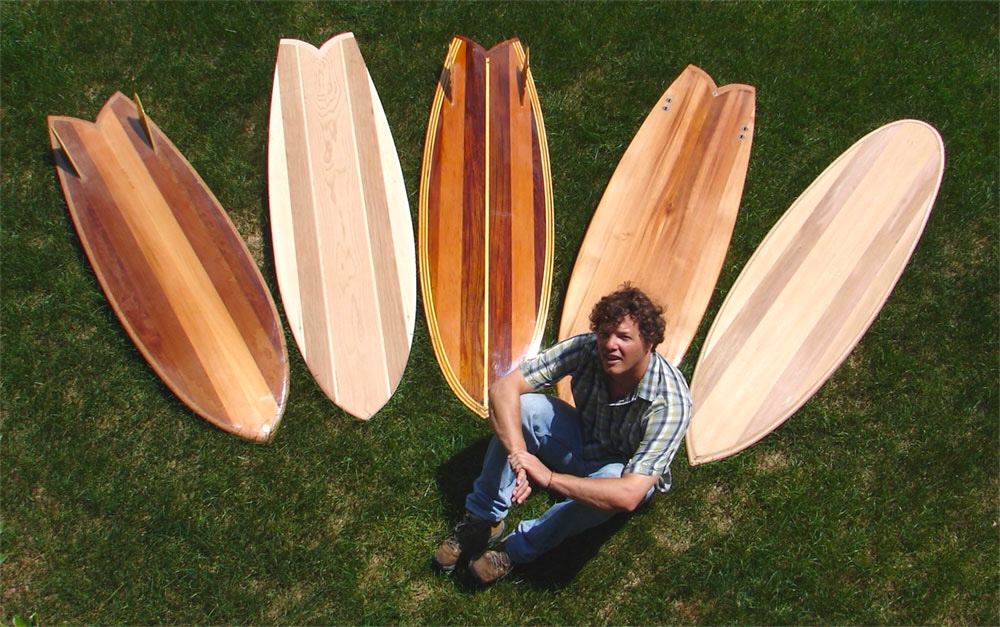
Previous builds.
No molds, no shortcuts. The log is milled into strips, feathered along their edges for a seamless glue-up, and worked over the frame plank by plank until the hull takes its shape. Nothing here is veneer — the deck and bottom planks are structural, and that is what lets the board be hollow, light, and strong while carrying the whole story of the tree it came from.
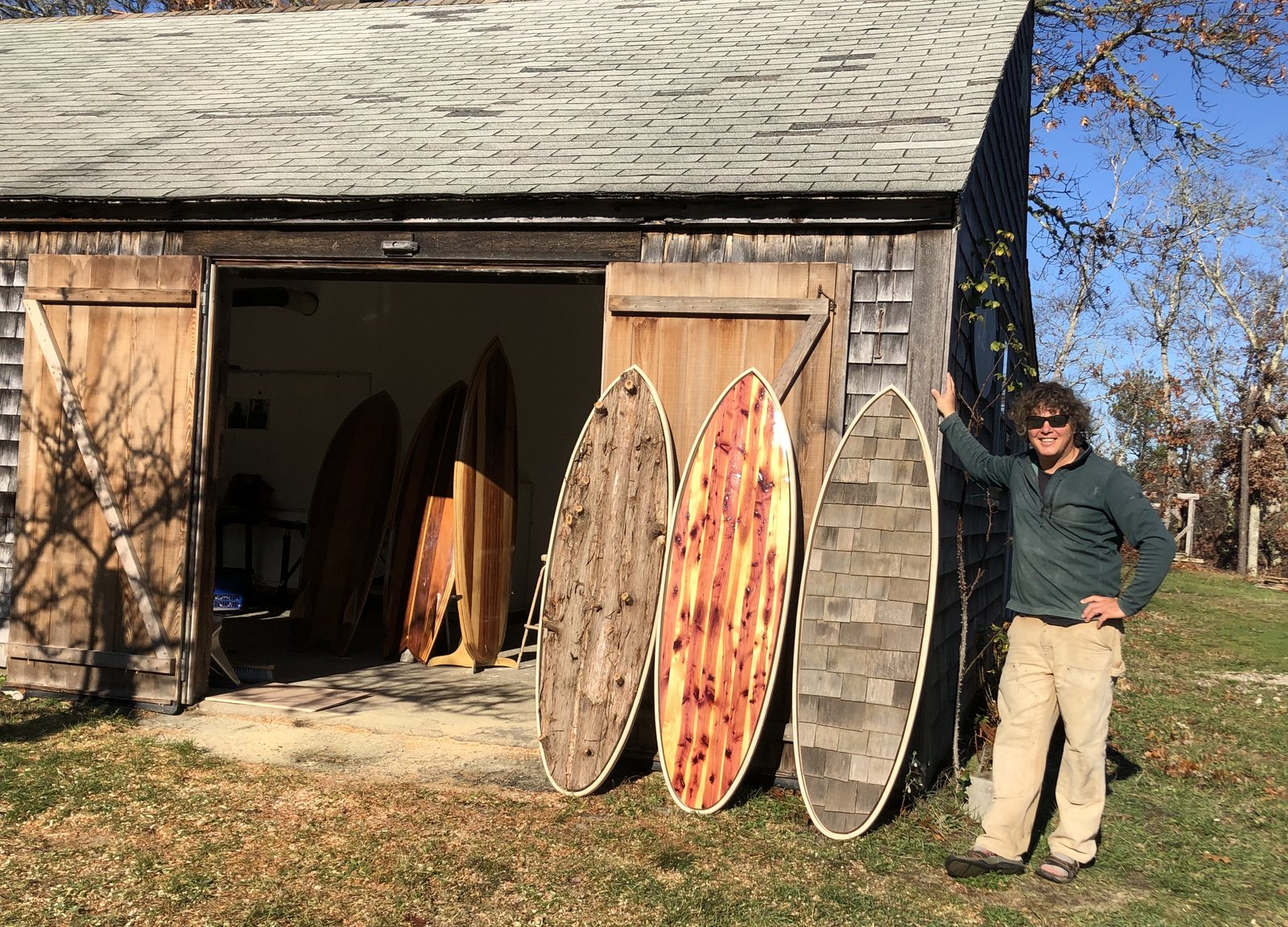
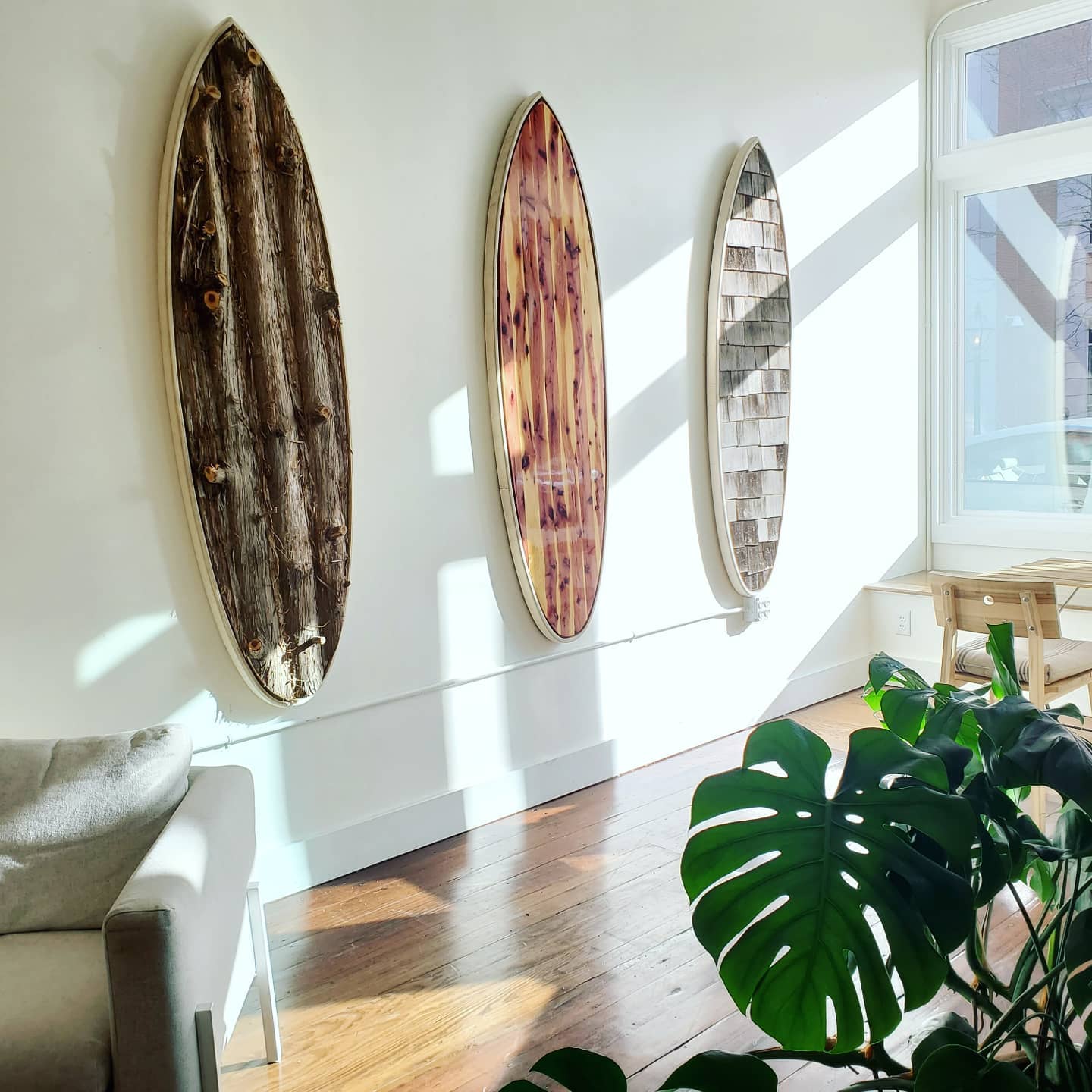
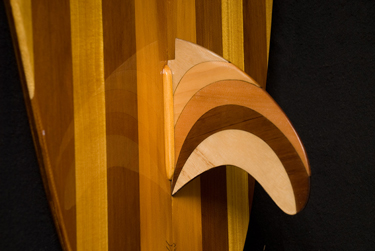
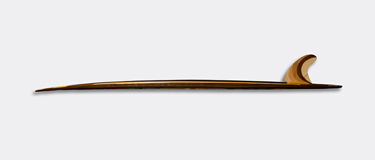
Where every board is headed.
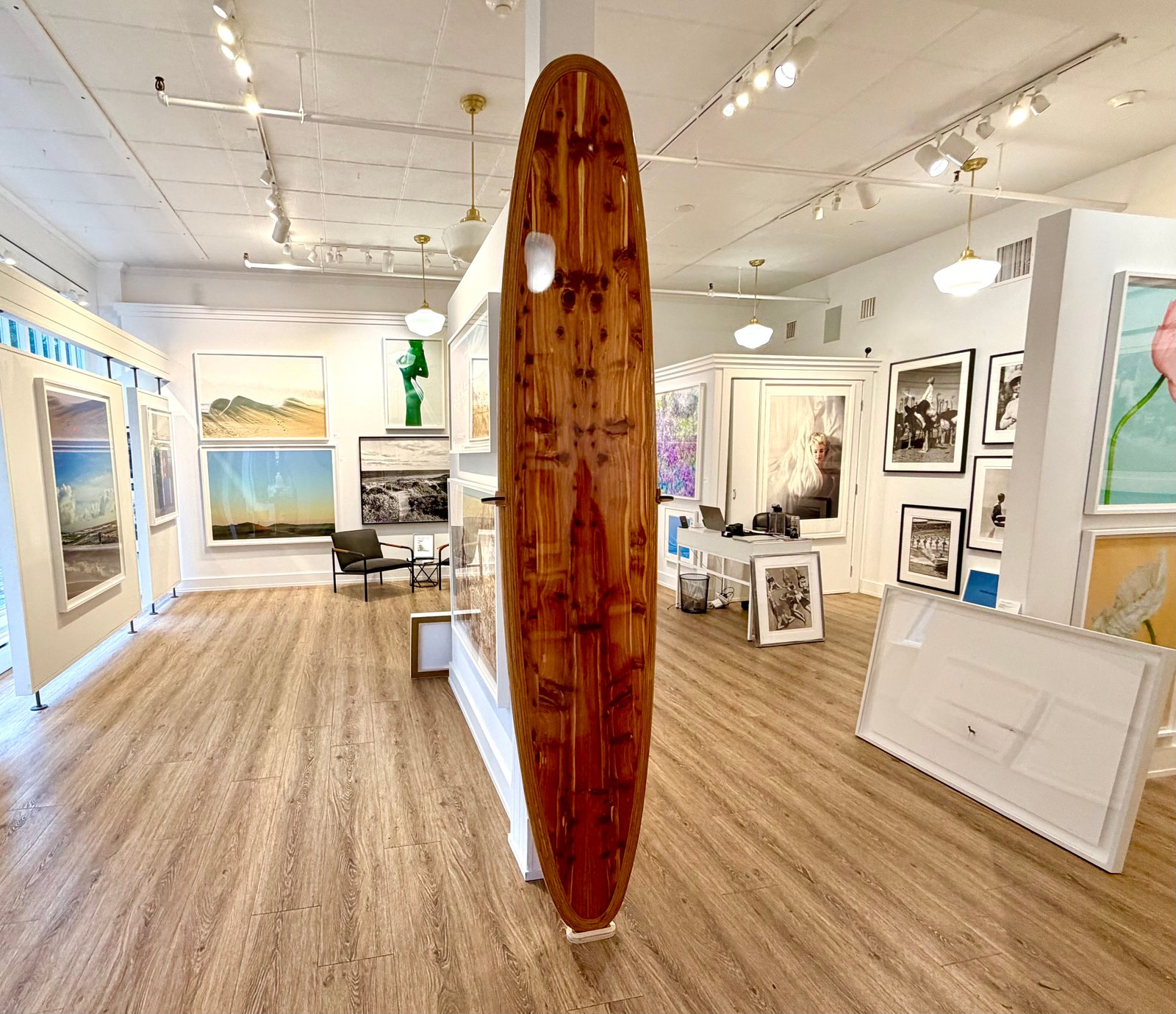
Made to stand on its own.
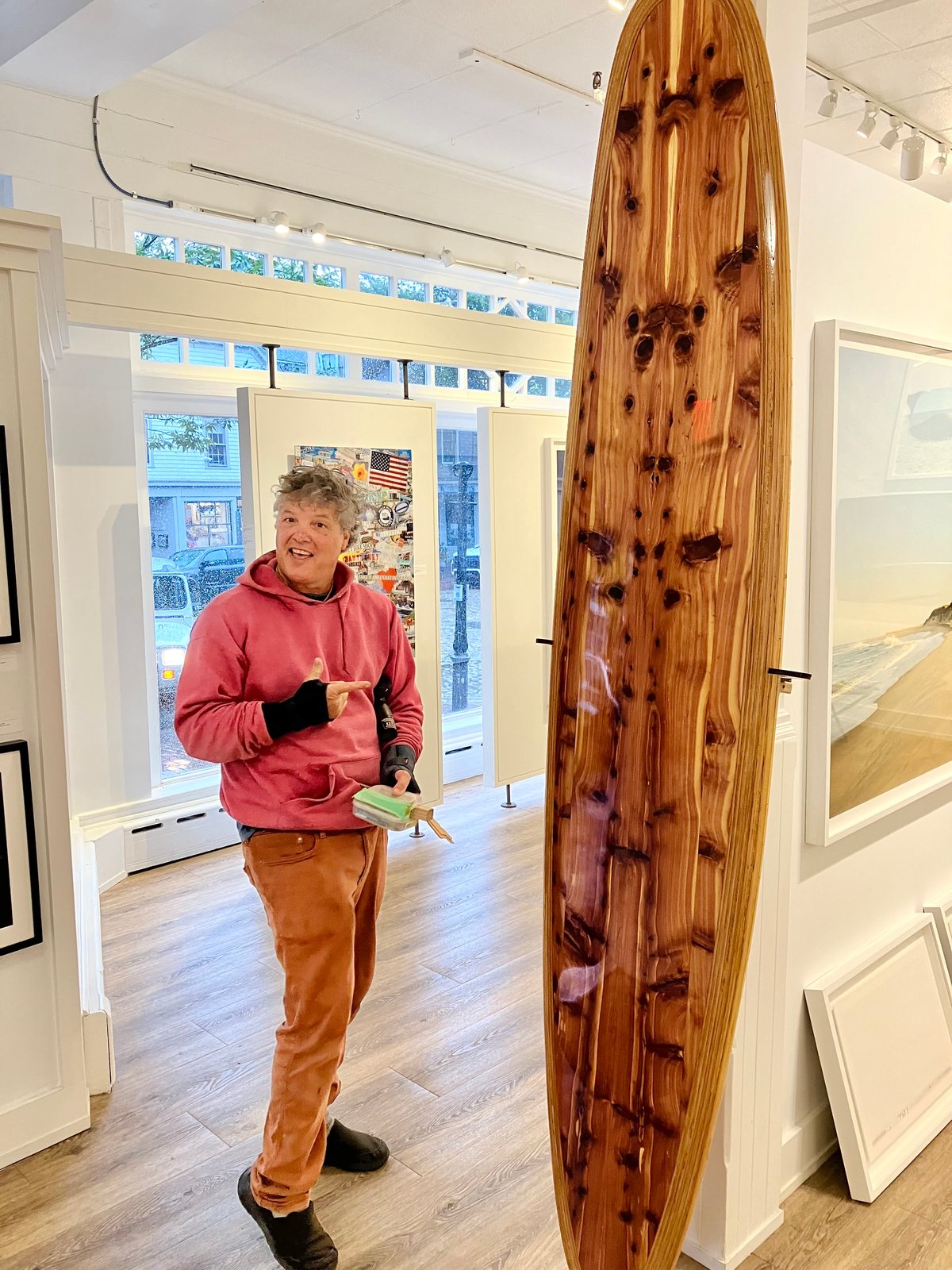
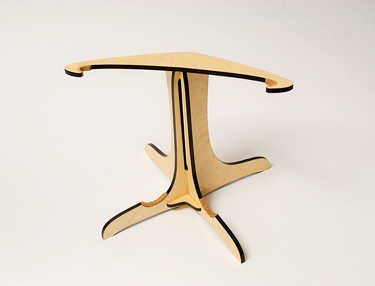
Rich also builds custom display stands, so a board can stand free and upright in a home or a gallery. The design lets it be seen from every side, and the fin fits into slots in the base, so the fin is on display too.
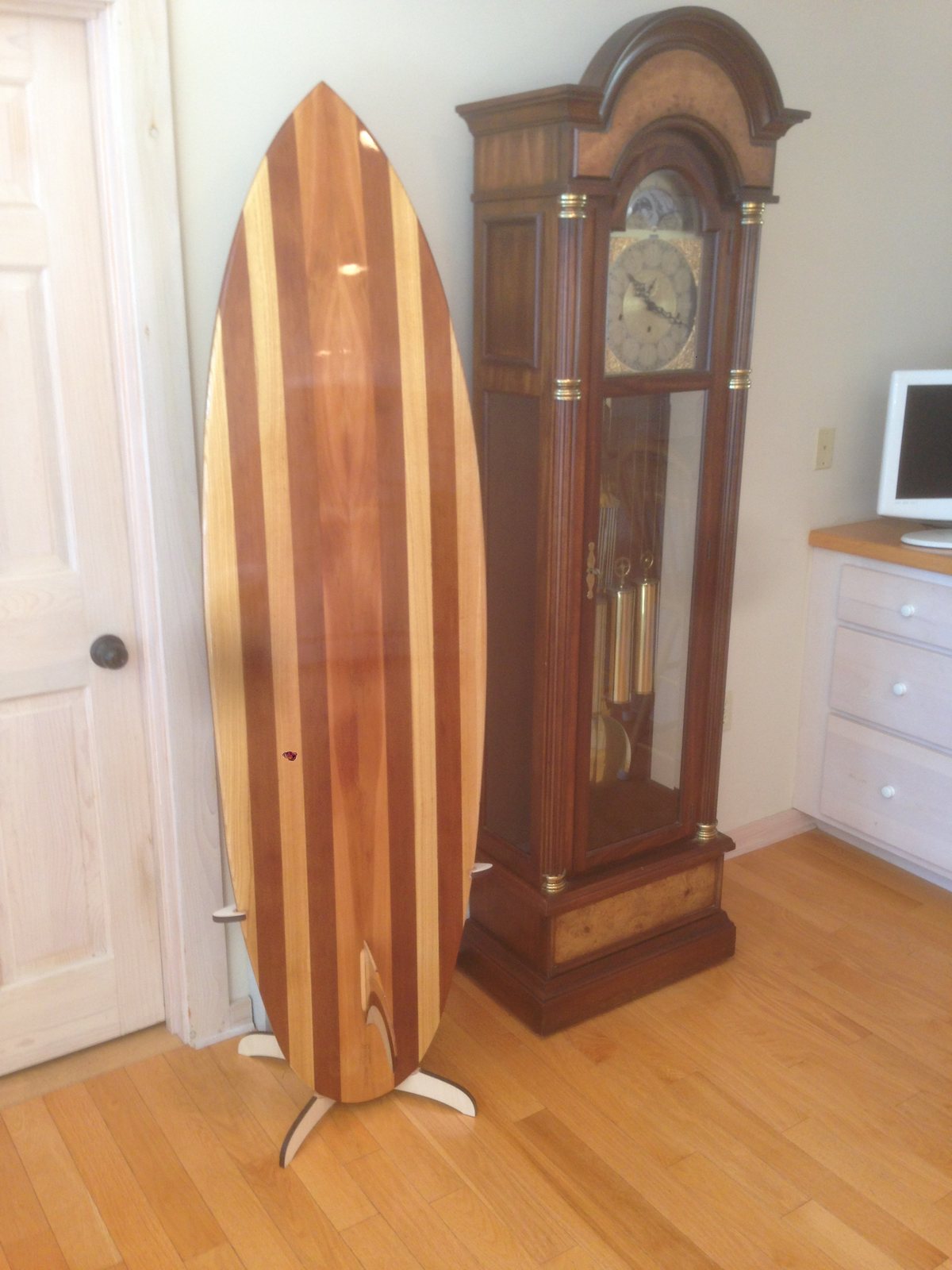
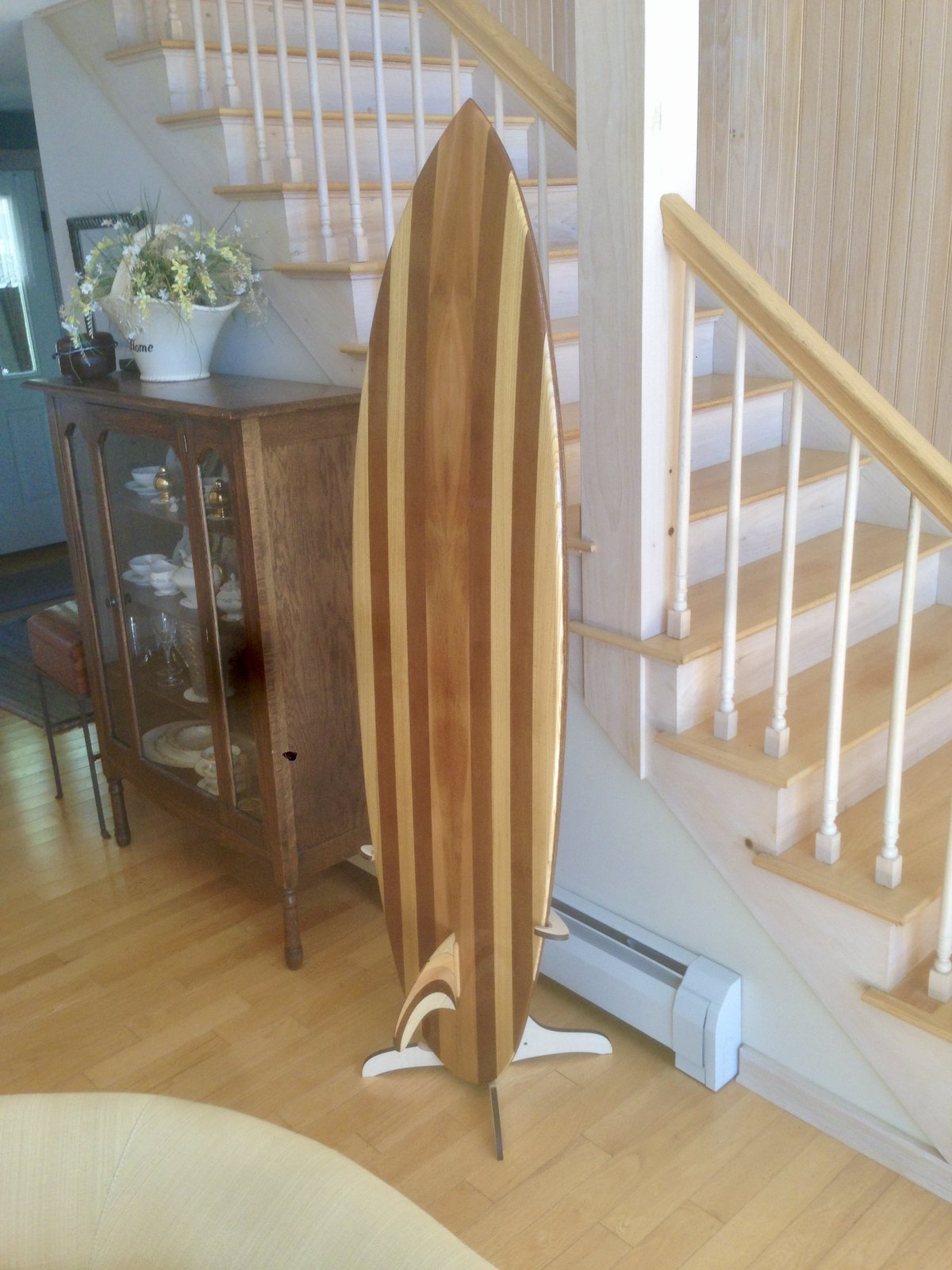
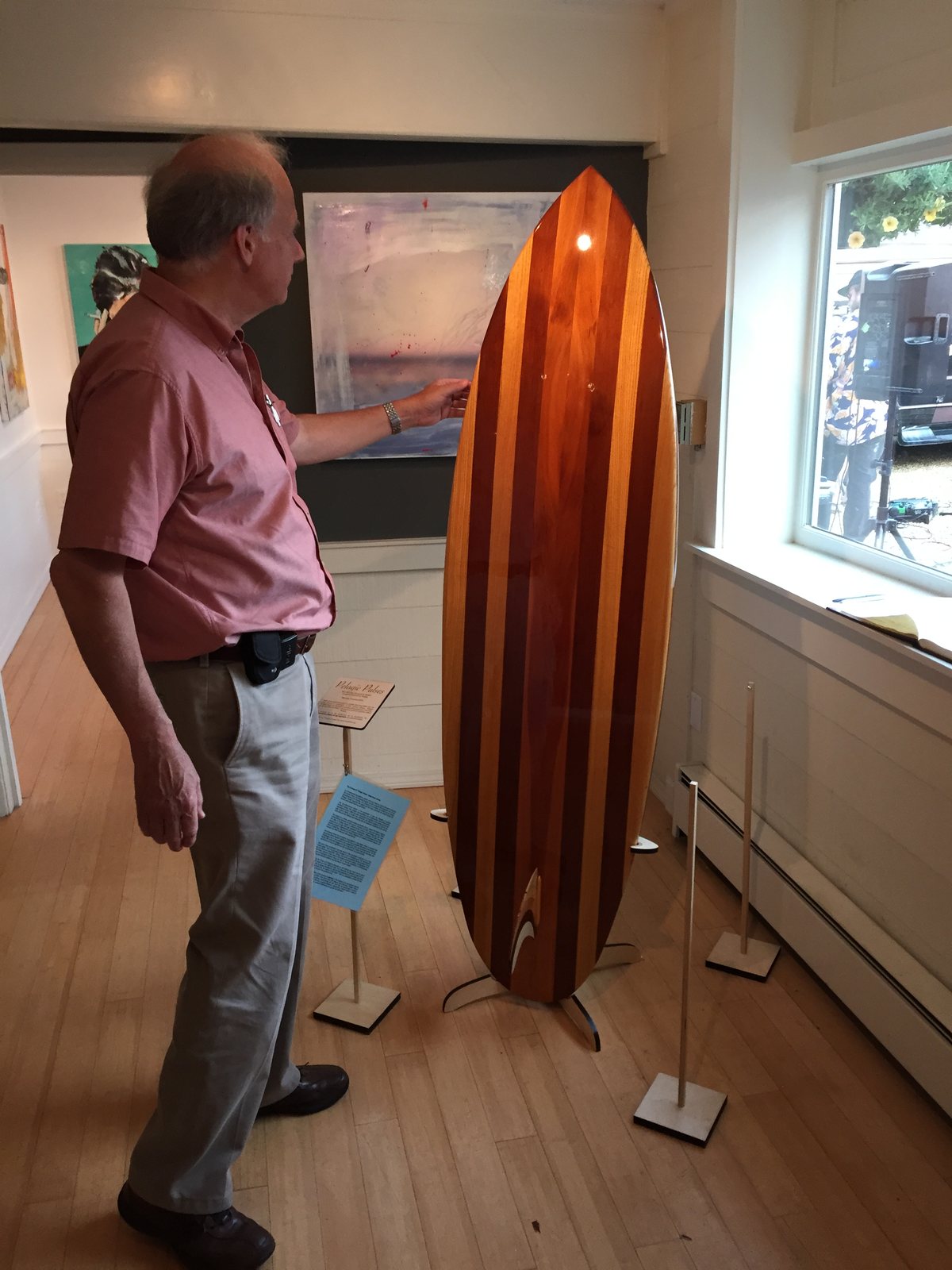
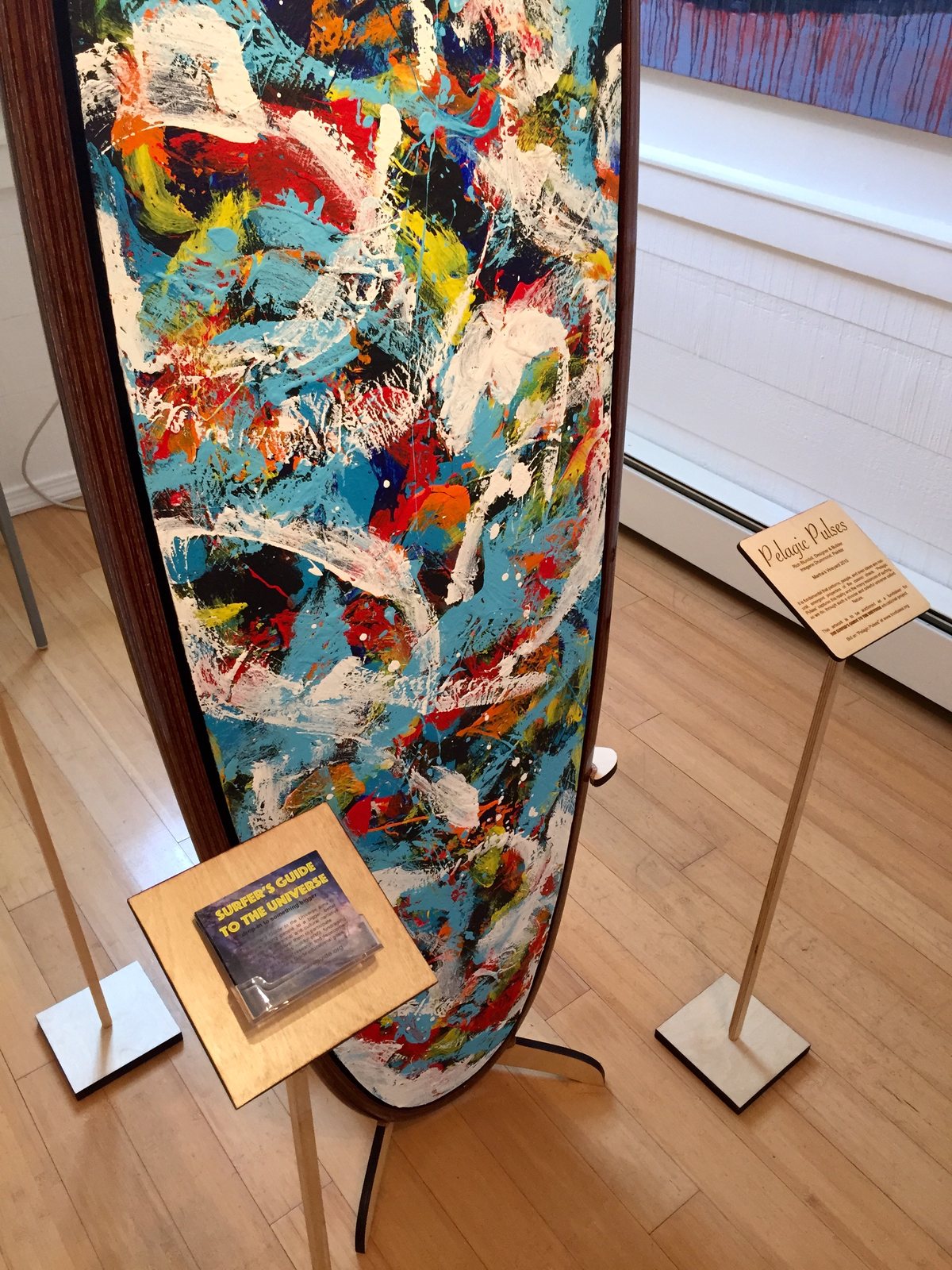
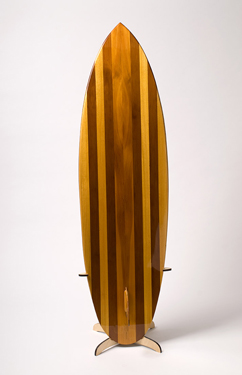
A nine-foot hollow wooden surfboard built by hand from a single Nantucket cedar — light, strong, and made entirely from the island's wood.
Hollow wooden construction, worked over the frame plank by plank. Rich's designs and build methods are used by HWS builders around the world — he has helped amateur builders and professional shops get established in the US, the UK, Europe, and Australia.
An integrated rail band method Rich developed to prioritize symmetry and aesthetic value. Laid up in a contrasting wood, it draws a rail outline the whole way round the board — structure and drawing at once, not trim added at the end.
Nothing is given up on hydrodynamics or integrity — and nothing is given up on how the board looks. No cork. No seams out of symmetry. It is going to surf well and look sweet.
A small shack on Nantucket, a short walk from the water.
Designed, framed, planked, shaped, and oiled as of September 2026 — sanded fair by hand, finished in tung oil, the rail outline running the full way round in contrasting wood, and the fin foils still in trial. The build is open to being documented from here to the first wave.
A story about craft, place, and slowing down.
Wood, Water & Waves has a clear arc and it is starting now: a tree, a design, a stack of frames, and a board that ends up in the water. The whole build is ahead — which means a story can follow it rather than arrive after the fact.
High-resolution photography, build footage, and interviews are available. Rich is glad to talk on the record about hollow wooden construction, the builders and shops his methods have helped start on three continents, and where a board comes from before it is a board.
Rich Blundell
Co-founder and former chief designer and builder at Grain Surfboards, Rich pioneered hollow wooden surfboard construction. His designs and build methods are now used by HWS builders around the world — he has helped amateur builders and professional shops get established in the US, the UK, Europe, and Australia. His work bridges craft, ecology, and the wonder of the natural world.
Duxbury, Massachusetts is his home habitat, and he is a Cape Cod and Islands organism. Wood, Water & Waves is his own build, done alone in a shack with hand tools, and documented as it goes.
He is looking for people to build with. More boards, made with more artists who share the same life philosophy — a love of the ocean, of nature, of quality objects and quality experiences, and of the good life that is still possible.
The future is beautiful or there isn't one. So let's make it.
Let's make it.
Rich is looking for collaborators — artists and makers who share a love of the ocean, of nature, and of well-made things and the experiences they open up. If that is you, say so. Or tell the story, follow the build, or ask about a board of your own.
omniscopic@gmail.com